Who Is the Vaultbreakers Developer? Inside BetaDwarf's Extraction RPG
Discover the team behind Vaultbreakers. Learn about developer BetaDwarf, publisher Square Enix, gameplay systems, and community playtest insights.
Published: Vaultbreakers Wiki Editorial Team
Table of Contents
BetaDwarf: The Team and Vision Behind Vaultbreakers
If you are tracking the emerging extraction RPG genre, the core team developing the title is Danish independent studio BetaDwarf, working alongside Square Enix as co-publisher. BetaDwarf built its reputation on cooperative and team-focused titles such as FORCED and Minion Masters, gaining community recognition for tight combat loops and iterative, player-involved development cycles.
With Vaultbreakers, BetaDwarf steps into a more ambitious space: combining top-down action RPG controls with the high-risk, high-reward tension of extraction mechanics. On the official Vaultbreakers on Steam hub, the studio positions the project as an adventure where planning, role execution, and situational awareness matter far more than blind aggression.
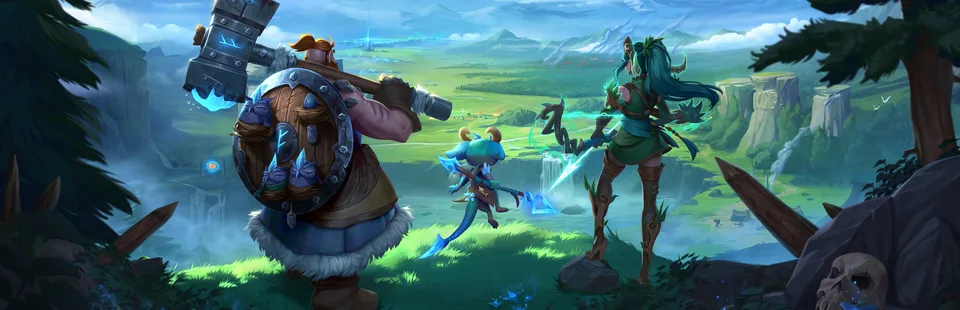
The overarching premise centers on the Dragonvault, an island-sized floating fortress that has reawakened and scattered corrupted artifacts across the land. Players step into the shoes of titular Vaultbreakers, diving into hostile regions to harvest relics, upgrade their personal Haven, and gradually prepare their loadouts to breach the Dragonvault itself.
Core Gameplay: How BetaDwarf Structures the Extraction Loop
Unlike conventional first-person extraction shooters, BetaDwarf builds Vaultbreakers on top-down isometric movement and tactical ability rotations. The game allows solo play or squads of up to three players, offering two distinct deployment avenues that share character progression.
PvE Expeditions
Focuses purely on AI encounters, environmental exploration, and story progression. This mode allows players to learn boss attack telegraphs, collect baseline materials, and upgrade their Haven without fear of enemy player ambushes.
PvPvE Contested Runs
Introduces rival squads into the map alongside aggressive world bosses. While danger increases exponentially, PvPvE expeditions dramatically amplify loot rarity, experience yield, and high-tier artifact drops required for end-game optimization.
The world design leans heavily into dynamic environmental hazards. Rather than static maps, encounters evolve based on both NPC triggers and player actions. For instance, players can trigger explosive flora like Cacti to ambush opponents, manipulate lightning traps, or trigger ancient world rituals that warp map pathways and alter monster aggression levels.
Survival revolves around knowing when to push deeper toward extraction points and when to withdraw. Dying during an expedition risks losing unbanked rewards, reinforcing the strategic push-and-pull rhythm characteristic of BetaDwarf's design philosophy.
Transparency in Production: BetaDwarf’s AI Disclosure
A notable aspect of BetaDwarf's development roadmap is their public transparency regarding production workflows. On the game's official Steam store page, the studio provided a detailed disclosure explaining how AI-assisted tools are integrated into their pipeline to support their relatively small core team.
Rapid Asset Prototyping: Generating preliminary 2D icons and select environment textures for early level testing.
Game Design Assistance: Managing large-scale data entry tables and indexing reference games for balance benchmarks.
Idea Generation: Brainstorming initial naming pools for items, artifacts, and base stat allocations.
Code Review & Text Cleanup: Screening code syntax and polishing localization strings across early test builds.
Human Oversight: Studio confirmation that every single mechanic, asset, and system in the final build is manually reviewed, tuned, or remade by human staff.
This level of disclosure gives players a clear view of how modern mid-sized indie studios leverage modern toolsets to deliver deep RPG systems without inflating production budgets or compromising creative direction.
Community Playtest Insights: Combat, Roles, and Progression
Recent community alpha playtests have offered players their first hands-on experience with BetaDwarf's systems. Community reports and player impressions highlight several standout mechanics, alongside distinct balance bottlenecks currently undergoing tuning.
Class Identity and Synergy
Player reports highlight strong character role definition. A prime example is the character Bjornir, built as a durable front-line anchor equipped with crowd-control slows, stuns, and high defensive scaling.
During PvP encounters, successful team compositions rely heavily on pairing a tanky character like Bjornir with high-burst damage dealers who can capitalize on vulnerability windows. The perk system allows players to customize specialization pathways, scaling either Attack Power (AD) or Ability Power (AP) to align with specific legendary weapon drops.
Exploration and Map Traversal
Playtesters frequently praise the verticality and secret routes present in maps such as Wolveswood. Traversal mechanics include:
Flora Launchers: Bulbs scattered across the environment that propel characters over impassable cliff sides for flanking maneuvers.
Teleportation Runes: Interactive stones that enable fast map repositions, creating intense PvP contest points when an enemy activation is spotted.
Hidden Boss Arenas: Breakable walls and hidden paths rewarding thorough map knowledge with unique encounters.
Critical Playtest Feedback: What BetaDwarf Needs to Address
While the foundational action combat has received positive community feedback, playtesters have identified several mechanical pain points that BetaDwarf will need to iterate on before the full commercial release.
The Gear Score vs. Slayer Gear Dilemma
Current playtests feature two distinct equipment classifications: Slayer Gear (tailored specifically with stats against world bosses) and Standard PvE/PvP Gear (balanced around minion damage, armor, and generic combat stats).
Because current UI indicators only display aggregate gear score rather than gear specialization, players cannot tell if an opponent is geared for PvP combat or purely PvE boss encounters. Furthermore, fighting late-game bosses with an equal gear score made of standard gear often results in sudden wipes, misleading players about their actual combat readiness.
Consumable Economy and Hotbar Friction
Community feedback has drawn attention to the consumable loop, particularly concerning healing resources:
Crafting Bottlenecks: Healing potions require significant crafting materials, often leaving players stranded without recovery items after challenging elite skirmishes.
Limited Hotkey Slots: The interface currently restricts players to two consumable hotkeys. In practice, players almost always allocate one slot to persistent food (for out-of-combat health regeneration) and the second to burst healing potions or bandages.
Wasted Utility: Potions offering stealth, haste, or defensive shielding are rarely slotted because sacrificing a baseline healing slot in an extraction environment represents too high of a survival risk. Adding a dedicated utility slot has emerged as a top player request.
Early Progression and Wolveswood Onboarding
New players entering Wolveswood without experienced companions reported feeling overwhelmed. The initial zone is expansive and populated with dangerous mob packs, while quest markers can be vague. Additionally, quest reward consistency has drawn critique: finishing lengthy quest chains currently awards placeholder-style gold bundles or randomized legendary items that may not fit the player's active character archetype.
Steam Family Identity: Demo vs. Full Game Status
When following Vaultbreakers, it is critical to distinguish between the different application profiles within the Steam ecosystem to avoid confusion regarding releases, features, and reviews.
Feature / Identifier
Full Base Game
Playable Demo / Alpha Tests
Steam App ID
306910
4488770
Official Release Date
To be announced
Periodic limited-time testing windows
Steam Review Status
No user reviews available
Not eligible for permanent store reviews
Monetization Model
Free to Play / RPG tag registered
Free test download
Progression Carry-over
Persistent Haven & gear storage
Limited "Legacy Points" carry-over to launch
BetaDwarf ran dedicated Alpha tests allowing participants to earn Legacy Points through specific challenges, granting unlockable permanent cosmetic or functional items intended to persist into the full game launch. However, content seen in the demo or temporary playtests does not represent final balance or complete feature sets.
How to Prepare for Future Playtests and Track Development
If you want to participate in upcoming test cycles and support BetaDwarf's feedback loop, follow these recommended steps.
Wishlist the Base Game: Navigate to the official Vaultbreakers Steam store page and add the title to your wishlist to receive notifications on release date announcements.
Check for Demo Availability: Monitor the Vaultbreakers Demo store entry (App ID 4488770) during seasonal Steam festivals to download current client builds.
Join Community Channels: Join BetaDwarf's official Discord and social feeds to register for private playtest waves and access alpha sign-up forms.
Submit Targeted Feedback: When testing builds, utilize developer bug-reporting channels to submit feedback specifically regarding gear clarity, consumable slot layout, and quest reward tuning.
Frequently Asked Questions About the Vaultbreakers Developer
Who is the developer of Vaultbreakers?
Vaultbreakers is developed by BetaDwarf, an independent gaming studio based in Copenhagen, Denmark, known for titles like FORCED and Minion Masters. The game is co-published by BetaDwarf and Square Enix.
Has the Vaultbreakers release date been confirmed?
No. The official planned release date on Steam is listed as "To be announced." BetaDwarf continues to conduct iterative alpha playtests to gather community data prior to committing to a final launch schedule.
Does the Vaultbreakers Demo carry progress over to the full game?
Standard gear and inventory collected in temporary playtest builds do not carry over to the final release. However, specific events allow players to earn "Legacy Points," which can unlock designated permanent rewards that persist after the full game launches.
What platforms is BetaDwarf developing Vaultbreakers for?
The primary confirmed platform is PC via Steam. System specifications indicate Windows 10 64-bit compatibility, requiring at minimum a GTX 960 / Radeon R9 380 GPU and 12 GB of RAM. Console editions have not been officially announced.